;%20}%20.cls-3%20{%20fill:%20none;%20}%20.cls-4%20{%20fill:%20url(%23Gradiente_sem_nome_8);%20}%20%3c/style%3e%3clinearGradient%20id='Gradiente_sem_nome_8'%20data-name='Gradiente%20sem%20nome%208'%20x1='42.56'%20y1='1058.47'%20x2='1918.26'%20y2='-1.54'%20gradientUnits='userSpaceOnUse'%3e%3cstop%20offset='.31'%20stop-color='%232c323c'/%3e%3cstop%20offset='.51'%20stop-color='%23333a46'/%3e%3cstop%20offset='.85'%20stop-color='%23485261'/%3e%3cstop%20offset='.98'%20stop-color='%23525d6d'/%3e%3c/linearGradient%3e%3cpattern%20id='New_Pattern'%20data-name='New%20Pattern'%20x='0'%20y='0'%20width='120'%20height='100'%20patternTransform='translate(6891.5745%201304.8193)'%20patternUnits='userSpaceOnUse'%20viewBox='0%200%20120%20100'%3e%3cg%3e%3crect%20class='cls-3'%20width='120'%20height='100'/%3e%3cg%3e%3cpolygon%20class='cls-1'%20points='120%20116.33%20102.22%2098.55%20102.22%2092.4%20108.26%2086.36%20114.42%2086.36%20119.95%2091.9%20125.34%2086.51%20126.05%2087.22%20119.95%2093.31%20114%2087.36%20108.67%2087.36%20103.22%2092.81%20103.22%2098.14%20120%20114.92%20136.82%2098.1%20137.53%2098.8%20120%20116.33'/%3e%3cpolygon%20class='cls-1'%20points='114.56%20110.18%20113.85%20109.48%20136.82%2086.51%20137.53%2087.22%20114.56%20110.18'/%3e%3c/g%3e%3cg%3e%3cpolygon%20class='cls-1'%20points='0%20116.33%20-17.78%2098.55%20-17.78%2092.4%20-11.74%2086.36%20-5.58%2086.36%20-.05%2091.9%205.34%2086.51%206.05%2087.22%20-.05%2093.31%20-6%2087.36%20-11.33%2087.36%20-16.78%2092.81%20-16.78%2098.14%200%20114.92%2016.82%2098.1%2017.53%2098.8%200%20116.33'/%3e%3cpolygon%20class='cls-1'%20points='17.67%2092.62%2016.67%2092.62%2016.67%2087.36%2011.45%2087.36%2011.45%2086.36%2017.67%2086.36%2017.67%2092.62'/%3e%3cpolygon%20class='cls-1'%20points='-5.44%20110.18%20-6.15%20109.48%2016.82%2086.51%2017.53%2087.22%20-5.44%20110.18'/%3e%3c/g%3e%3cg%3e%3cpolygon%20class='cls-1'%20points='120%2016.33%20102.22%20-1.45%20102.22%20-7.6%20108.26%20-13.64%20114.42%20-13.64%20119.95%20-8.1%20125.34%20-13.49%20126.05%20-12.78%20119.95%20-6.69%20114%20-12.64%20108.67%20-12.64%20103.22%20-7.19%20103.22%20-1.86%20120%2014.92%20136.82%20-1.9%20137.53%20-1.2%20120%2016.33'/%3e%3cpolygon%20class='cls-1'%20points='114.56%2010.18%20113.85%209.48%20136.82%20-13.49%20137.53%20-12.78%20114.56%2010.18'/%3e%3c/g%3e%3cg%3e%3cpolygon%20class='cls-1'%20points='60%2066.33%2042.22%2048.55%2042.22%2042.4%2048.26%2036.36%2054.42%2036.36%2059.95%2041.9%2065.34%2036.51%2066.05%2037.22%2059.95%2043.31%2054%2037.36%2048.67%2037.36%2043.22%2042.81%2043.22%2048.14%2060%2064.92%2076.82%2048.1%2077.53%2048.8%2060%2066.33'/%3e%3cpolygon%20class='cls-1'%20points='77.67%2042.62%2076.67%2042.62%2076.67%2037.36%2071.45%2037.36%2071.45%2036.36%2077.67%2036.36%2077.67%2042.62'/%3e%3cpolygon%20class='cls-1'%20points='54.56%2060.18%2053.85%2059.48%2076.82%2036.51%2077.53%2037.22%2054.56%2060.18'/%3e%3c/g%3e%3cg%3e%3cpolygon%20class='cls-1'%20points='0%2016.33%20-17.78%20-1.45%20-17.78%20-7.6%20-11.74%20-13.64%20-5.58%20-13.64%20-.05%20-8.1%205.34%20-13.49%206.05%20-12.78%20-.05%20-6.69%20-6%20-12.64%20-11.33%20-12.64%20-16.78%20-7.19%20-16.78%20-1.86%200%2014.92%2016.82%20-1.9%2017.53%20-1.2%200%2016.33'/%3e%3cpolygon%20class='cls-1'%20points='-5.44%2010.18%20-6.15%209.48%2016.82%20-13.49%2017.53%20-12.78%20-5.44%2010.18'/%3e%3c/g%3e%3c/g%3e%3c/pattern%3e%3c/defs%3e%3cg%20id='Layer_1'%20data-name='Layer%201'%3e%3crect%20class='cls-4'%20x='0'%20y='.07'%20width='1920'%20height='1079.86'/%3e%3crect%20class='cls-2'%20x='0'%20width='1920'%20height='1079.86'/%3e%3c/g%3e%3c/svg%3e)
Moving and Handling: Essential Techniques
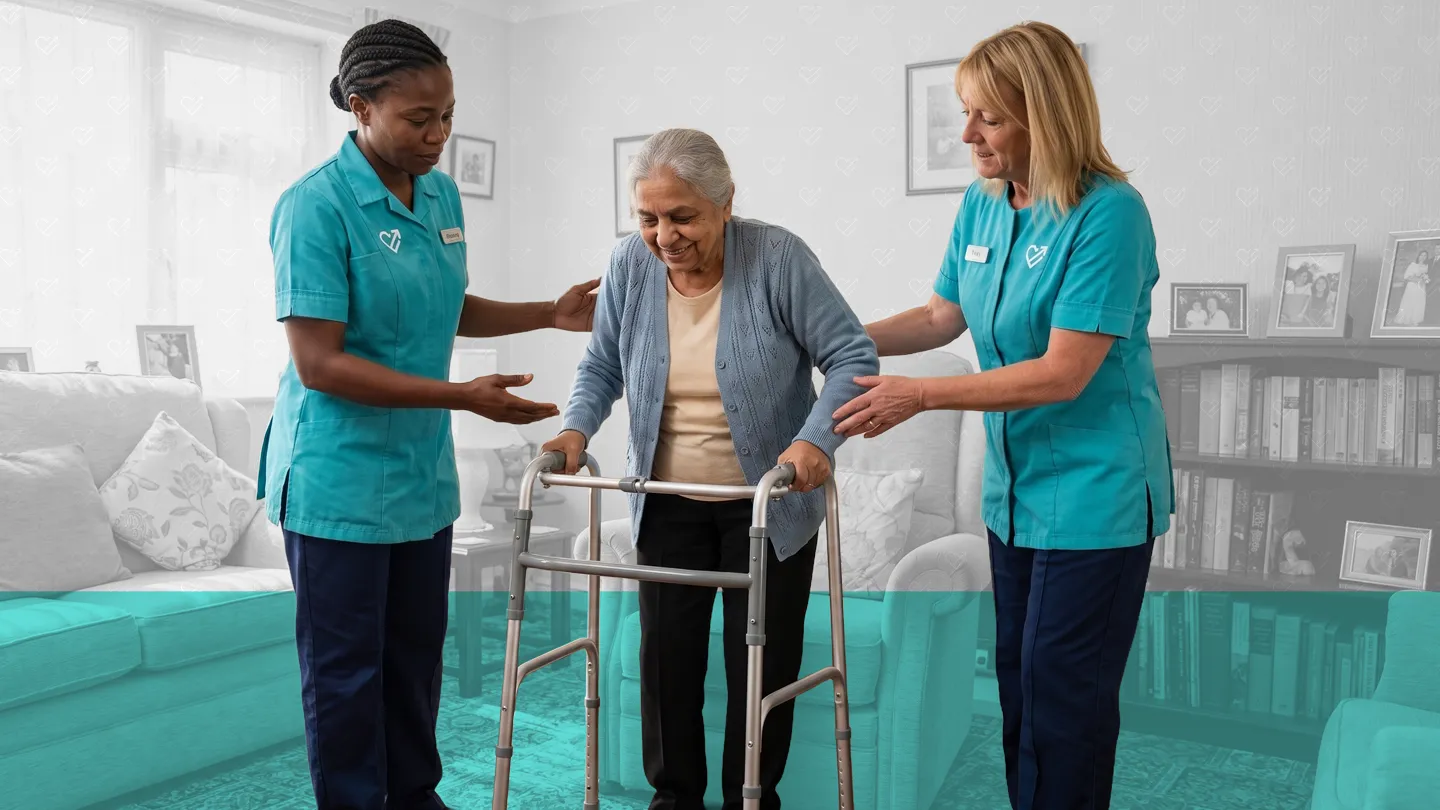
A back injury in care is rarely one sudden lift. It builds over years of small hauls and stoops until an ordinary movement, on an ordinary shift, ends a career. This course shows you what the law asks of you and your employer: why nobody should ever take most or all of a person's weight, what the handling plan in the care plan is for, how to recognise the equipment that does the lifting so your spine doesn't have to, and where this training stops. It will not teach you to perform transfers; no online course can do that safely. It will make you the worker who reads the plan before every move and speaks up the moment something looks wrong.
- 100% online, any time
- On any device
- Accredited certificate on completion
- Learn by doing
- Storytelling built around your routine
- Audio and alt text throughout
Subscribe from £29.99 a month
Compare plansWhat you'll learn
Course content
5 modules

Specialist
Sophie Barber
A qualified teacher, examiner and content creator, Sophie has over 10 years experience developing resources for examination boards to ensure that they are using effective learning tools. An ex-medic, Sophie has a huge passion for the healthcare profession and the importance of delivering quality care.
Training you can trust
How this course works. You will work through self-paced modules, check your understanding with knowledge checks, and finish with a short assessment. On passing, your CPD-certified certificate is available to download immediately, ready for your CQC evidence file or employer records.
Recommended renewal: every year. Your certificate is valid for 12 months. Skills for Care's minimum for most topics is every 3 years. Refresher periods by topic

Accredited by CPD
All of our courses are accredited by the CPD Certification Service as conforming to universally accepted Continuing Professional Development (CPD) guidelines.