;%20}%20.cls-3%20{%20fill:%20none;%20}%20.cls-4%20{%20fill:%20url(%23Gradiente_sem_nome_8);%20}%20%3c/style%3e%3clinearGradient%20id='Gradiente_sem_nome_8'%20data-name='Gradiente%20sem%20nome%208'%20x1='42.56'%20y1='1058.47'%20x2='1918.26'%20y2='-1.54'%20gradientUnits='userSpaceOnUse'%3e%3cstop%20offset='.31'%20stop-color='%232c323c'/%3e%3cstop%20offset='.51'%20stop-color='%23333a46'/%3e%3cstop%20offset='.85'%20stop-color='%23485261'/%3e%3cstop%20offset='.98'%20stop-color='%23525d6d'/%3e%3c/linearGradient%3e%3cpattern%20id='New_Pattern'%20data-name='New%20Pattern'%20x='0'%20y='0'%20width='120'%20height='100'%20patternTransform='translate(6891.5745%201304.8193)'%20patternUnits='userSpaceOnUse'%20viewBox='0%200%20120%20100'%3e%3cg%3e%3crect%20class='cls-3'%20width='120'%20height='100'/%3e%3cg%3e%3cpolygon%20class='cls-1'%20points='120%20116.33%20102.22%2098.55%20102.22%2092.4%20108.26%2086.36%20114.42%2086.36%20119.95%2091.9%20125.34%2086.51%20126.05%2087.22%20119.95%2093.31%20114%2087.36%20108.67%2087.36%20103.22%2092.81%20103.22%2098.14%20120%20114.92%20136.82%2098.1%20137.53%2098.8%20120%20116.33'/%3e%3cpolygon%20class='cls-1'%20points='114.56%20110.18%20113.85%20109.48%20136.82%2086.51%20137.53%2087.22%20114.56%20110.18'/%3e%3c/g%3e%3cg%3e%3cpolygon%20class='cls-1'%20points='0%20116.33%20-17.78%2098.55%20-17.78%2092.4%20-11.74%2086.36%20-5.58%2086.36%20-.05%2091.9%205.34%2086.51%206.05%2087.22%20-.05%2093.31%20-6%2087.36%20-11.33%2087.36%20-16.78%2092.81%20-16.78%2098.14%200%20114.92%2016.82%2098.1%2017.53%2098.8%200%20116.33'/%3e%3cpolygon%20class='cls-1'%20points='17.67%2092.62%2016.67%2092.62%2016.67%2087.36%2011.45%2087.36%2011.45%2086.36%2017.67%2086.36%2017.67%2092.62'/%3e%3cpolygon%20class='cls-1'%20points='-5.44%20110.18%20-6.15%20109.48%2016.82%2086.51%2017.53%2087.22%20-5.44%20110.18'/%3e%3c/g%3e%3cg%3e%3cpolygon%20class='cls-1'%20points='120%2016.33%20102.22%20-1.45%20102.22%20-7.6%20108.26%20-13.64%20114.42%20-13.64%20119.95%20-8.1%20125.34%20-13.49%20126.05%20-12.78%20119.95%20-6.69%20114%20-12.64%20108.67%20-12.64%20103.22%20-7.19%20103.22%20-1.86%20120%2014.92%20136.82%20-1.9%20137.53%20-1.2%20120%2016.33'/%3e%3cpolygon%20class='cls-1'%20points='114.56%2010.18%20113.85%209.48%20136.82%20-13.49%20137.53%20-12.78%20114.56%2010.18'/%3e%3c/g%3e%3cg%3e%3cpolygon%20class='cls-1'%20points='60%2066.33%2042.22%2048.55%2042.22%2042.4%2048.26%2036.36%2054.42%2036.36%2059.95%2041.9%2065.34%2036.51%2066.05%2037.22%2059.95%2043.31%2054%2037.36%2048.67%2037.36%2043.22%2042.81%2043.22%2048.14%2060%2064.92%2076.82%2048.1%2077.53%2048.8%2060%2066.33'/%3e%3cpolygon%20class='cls-1'%20points='77.67%2042.62%2076.67%2042.62%2076.67%2037.36%2071.45%2037.36%2071.45%2036.36%2077.67%2036.36%2077.67%2042.62'/%3e%3cpolygon%20class='cls-1'%20points='54.56%2060.18%2053.85%2059.48%2076.82%2036.51%2077.53%2037.22%2054.56%2060.18'/%3e%3c/g%3e%3cg%3e%3cpolygon%20class='cls-1'%20points='0%2016.33%20-17.78%20-1.45%20-17.78%20-7.6%20-11.74%20-13.64%20-5.58%20-13.64%20-.05%20-8.1%205.34%20-13.49%206.05%20-12.78%20-.05%20-6.69%20-6%20-12.64%20-11.33%20-12.64%20-16.78%20-7.19%20-16.78%20-1.86%200%2014.92%2016.82%20-1.9%2017.53%20-1.2%200%2016.33'/%3e%3cpolygon%20class='cls-1'%20points='-5.44%2010.18%20-6.15%209.48%2016.82%20-13.49%2017.53%20-12.78%20-5.44%2010.18'/%3e%3c/g%3e%3c/g%3e%3c/pattern%3e%3c/defs%3e%3cg%20id='Layer_1'%20data-name='Layer%201'%3e%3crect%20class='cls-4'%20x='0'%20y='.07'%20width='1920'%20height='1079.86'/%3e%3crect%20class='cls-2'%20x='0'%20width='1920'%20height='1079.86'/%3e%3c/g%3e%3c/svg%3e)
Safeguarding Adults
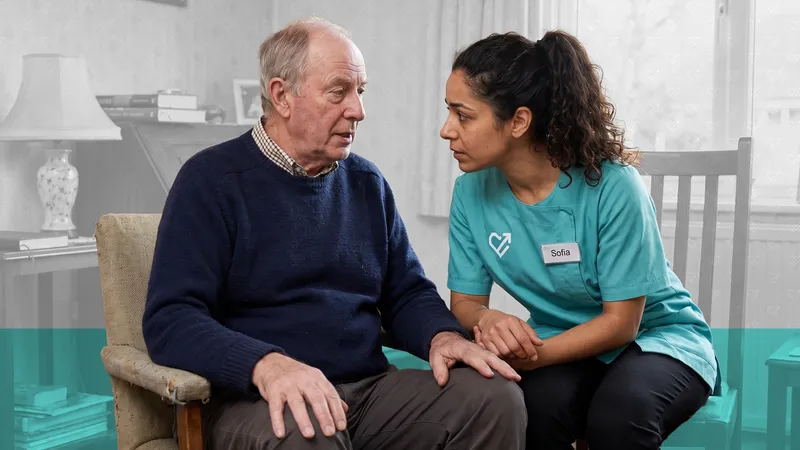
Most abuse doesn't look like the news. It looks like a bruise nobody asks about, a relative 'helping' with someone's money, a person who goes quiet when one name comes up. This course teaches you the types of abuse the law recognises and the signs a care worker would notice on an ordinary visit. Then it covers the part that matters most: what to do when you suspect abuse, or when someone tells you about it directly. What to say, what never to promise, what to write down, and who to tell, including when the person you would normally tell is the problem. You are never asked to investigate or to prove anything; your job is to notice and report, and to keep the person's own wishes at the centre of what happens next. Get that right and you are doing what the Care Act asks of you, and what a CQC inspector expects every care worker to know.
- 100% online, any time
- On any device
- Accredited certificate on completion
- Learn by doing
- Storytelling built around your routine
- Audio and alt text throughout
Subscribe from £29.99 a month
Compare plansWhat you'll learn
Course content
5 modules

Specialist
Sophie Barber
A qualified teacher, examiner and content creator, Sophie has over 10 years experience developing resources for examination boards to ensure that they are using effective learning tools. An ex-medic, Sophie has a huge passion for the healthcare profession and the importance of delivering quality care.
Training you can trust
How this course works. You will work through self-paced modules, check your understanding with knowledge checks, and finish with a short assessment. On passing, your CPD-certified certificate is available to download immediately, ready for your CQC evidence file or employer records.
Recommended renewal: every year. Your certificate is valid for 12 months. Skills for Care's minimum for most topics is every 3 years. Refresher periods by topic

Accredited by CPD
All of our courses are accredited by the CPD Certification Service as conforming to universally accepted Continuing Professional Development (CPD) guidelines.