;%20}%20.cls-3%20{%20fill:%20none;%20}%20.cls-4%20{%20fill:%20url(%23Gradiente_sem_nome_8);%20}%20%3c/style%3e%3clinearGradient%20id='Gradiente_sem_nome_8'%20data-name='Gradiente%20sem%20nome%208'%20x1='42.56'%20y1='1058.47'%20x2='1918.26'%20y2='-1.54'%20gradientUnits='userSpaceOnUse'%3e%3cstop%20offset='.31'%20stop-color='%232c323c'/%3e%3cstop%20offset='.51'%20stop-color='%23333a46'/%3e%3cstop%20offset='.85'%20stop-color='%23485261'/%3e%3cstop%20offset='.98'%20stop-color='%23525d6d'/%3e%3c/linearGradient%3e%3cpattern%20id='New_Pattern'%20data-name='New%20Pattern'%20x='0'%20y='0'%20width='120'%20height='100'%20patternTransform='translate(6891.5745%201304.8193)'%20patternUnits='userSpaceOnUse'%20viewBox='0%200%20120%20100'%3e%3cg%3e%3crect%20class='cls-3'%20width='120'%20height='100'/%3e%3cg%3e%3cpolygon%20class='cls-1'%20points='120%20116.33%20102.22%2098.55%20102.22%2092.4%20108.26%2086.36%20114.42%2086.36%20119.95%2091.9%20125.34%2086.51%20126.05%2087.22%20119.95%2093.31%20114%2087.36%20108.67%2087.36%20103.22%2092.81%20103.22%2098.14%20120%20114.92%20136.82%2098.1%20137.53%2098.8%20120%20116.33'/%3e%3cpolygon%20class='cls-1'%20points='114.56%20110.18%20113.85%20109.48%20136.82%2086.51%20137.53%2087.22%20114.56%20110.18'/%3e%3c/g%3e%3cg%3e%3cpolygon%20class='cls-1'%20points='0%20116.33%20-17.78%2098.55%20-17.78%2092.4%20-11.74%2086.36%20-5.58%2086.36%20-.05%2091.9%205.34%2086.51%206.05%2087.22%20-.05%2093.31%20-6%2087.36%20-11.33%2087.36%20-16.78%2092.81%20-16.78%2098.14%200%20114.92%2016.82%2098.1%2017.53%2098.8%200%20116.33'/%3e%3cpolygon%20class='cls-1'%20points='17.67%2092.62%2016.67%2092.62%2016.67%2087.36%2011.45%2087.36%2011.45%2086.36%2017.67%2086.36%2017.67%2092.62'/%3e%3cpolygon%20class='cls-1'%20points='-5.44%20110.18%20-6.15%20109.48%2016.82%2086.51%2017.53%2087.22%20-5.44%20110.18'/%3e%3c/g%3e%3cg%3e%3cpolygon%20class='cls-1'%20points='120%2016.33%20102.22%20-1.45%20102.22%20-7.6%20108.26%20-13.64%20114.42%20-13.64%20119.95%20-8.1%20125.34%20-13.49%20126.05%20-12.78%20119.95%20-6.69%20114%20-12.64%20108.67%20-12.64%20103.22%20-7.19%20103.22%20-1.86%20120%2014.92%20136.82%20-1.9%20137.53%20-1.2%20120%2016.33'/%3e%3cpolygon%20class='cls-1'%20points='114.56%2010.18%20113.85%209.48%20136.82%20-13.49%20137.53%20-12.78%20114.56%2010.18'/%3e%3c/g%3e%3cg%3e%3cpolygon%20class='cls-1'%20points='60%2066.33%2042.22%2048.55%2042.22%2042.4%2048.26%2036.36%2054.42%2036.36%2059.95%2041.9%2065.34%2036.51%2066.05%2037.22%2059.95%2043.31%2054%2037.36%2048.67%2037.36%2043.22%2042.81%2043.22%2048.14%2060%2064.92%2076.82%2048.1%2077.53%2048.8%2060%2066.33'/%3e%3cpolygon%20class='cls-1'%20points='77.67%2042.62%2076.67%2042.62%2076.67%2037.36%2071.45%2037.36%2071.45%2036.36%2077.67%2036.36%2077.67%2042.62'/%3e%3cpolygon%20class='cls-1'%20points='54.56%2060.18%2053.85%2059.48%2076.82%2036.51%2077.53%2037.22%2054.56%2060.18'/%3e%3c/g%3e%3cg%3e%3cpolygon%20class='cls-1'%20points='0%2016.33%20-17.78%20-1.45%20-17.78%20-7.6%20-11.74%20-13.64%20-5.58%20-13.64%20-.05%20-8.1%205.34%20-13.49%206.05%20-12.78%20-.05%20-6.69%20-6%20-12.64%20-11.33%20-12.64%20-16.78%20-7.19%20-16.78%20-1.86%200%2014.92%2016.82%20-1.9%2017.53%20-1.2%200%2016.33'/%3e%3cpolygon%20class='cls-1'%20points='-5.44%2010.18%20-6.15%209.48%2016.82%20-13.49%2017.53%20-12.78%20-5.44%2010.18'/%3e%3c/g%3e%3c/g%3e%3c/pattern%3e%3c/defs%3e%3cg%20id='Layer_1'%20data-name='Layer%201'%3e%3crect%20class='cls-4'%20x='0'%20y='.07'%20width='1920'%20height='1079.86'/%3e%3crect%20class='cls-2'%20x='0'%20width='1920'%20height='1079.86'/%3e%3c/g%3e%3c/svg%3e)
Food Hygiene & Safety for Food Handlers
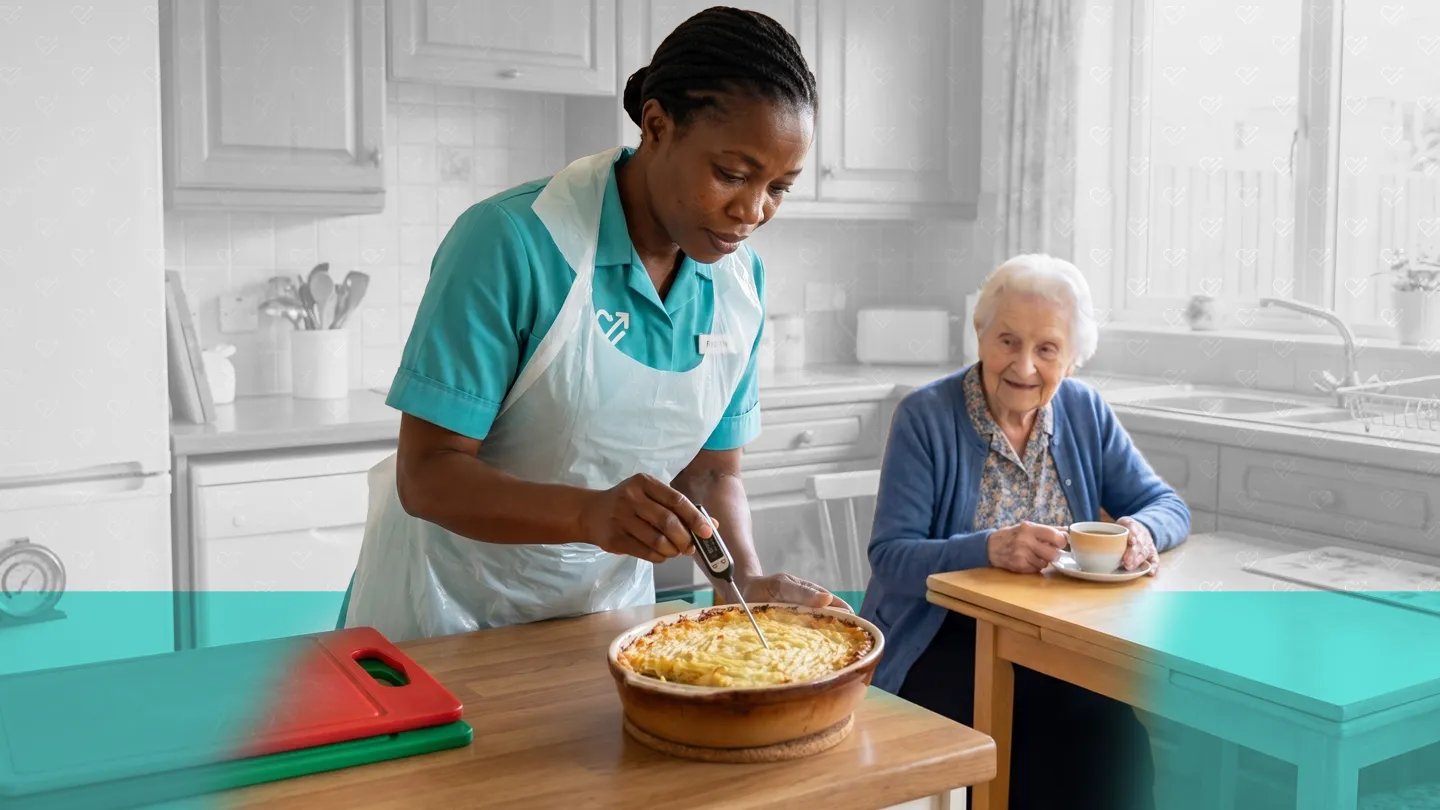
Making toast, reheating a plated meal, putting the shopping away, helping someone eat: food law counts all of that as handling food. And the people you support are the least able to cope when it goes wrong. In 2025, listeriosis incidence in England and Wales was highest in people aged 80 and over, and one outbreak traced to frozen desserts supplied to hospitals and care homes infected five people, four of whom died. This course gives you the figures you use on shift, for the fridge, for cooking, for hot holding and for reheating. It also gives you the judgement a catering course never covers: gift food with no label, a shared mini-kitchen fridge, an allergy the person can no longer tell you about, a texture level changed by a text message. By the end you will know what to check before you plate up, what makes food unsafe to serve, and who to tell the moment something looks wrong.
- 100% online, any time
- On any device
- Accredited certificate on completion
- Learn by doing
- Storytelling built around your routine
- Audio and alt text throughout
Subscribe from £29.99 a month
Compare plansWhat you'll learn
Course content
5 modules

Specialist
Sophie Barber
A qualified teacher, examiner and content creator, Sophie has over 10 years experience developing resources for examination boards to ensure that they are using effective learning tools. An ex-medic, Sophie has a huge passion for the healthcare profession and the importance of delivering quality care.
Training you can trust
How this course works. You will work through self-paced modules, check your understanding with knowledge checks, and finish with a short assessment. On passing, your CPD-certified certificate is available to download immediately, ready for your CQC evidence file or employer records.
Recommended renewal: every year. Your certificate is valid for 12 months. Skills for Care's minimum for most topics is every 3 years. Refresher periods by topic

Accredited by CPD
All of our courses are accredited by the CPD Certification Service as conforming to universally accepted Continuing Professional Development (CPD) guidelines.